
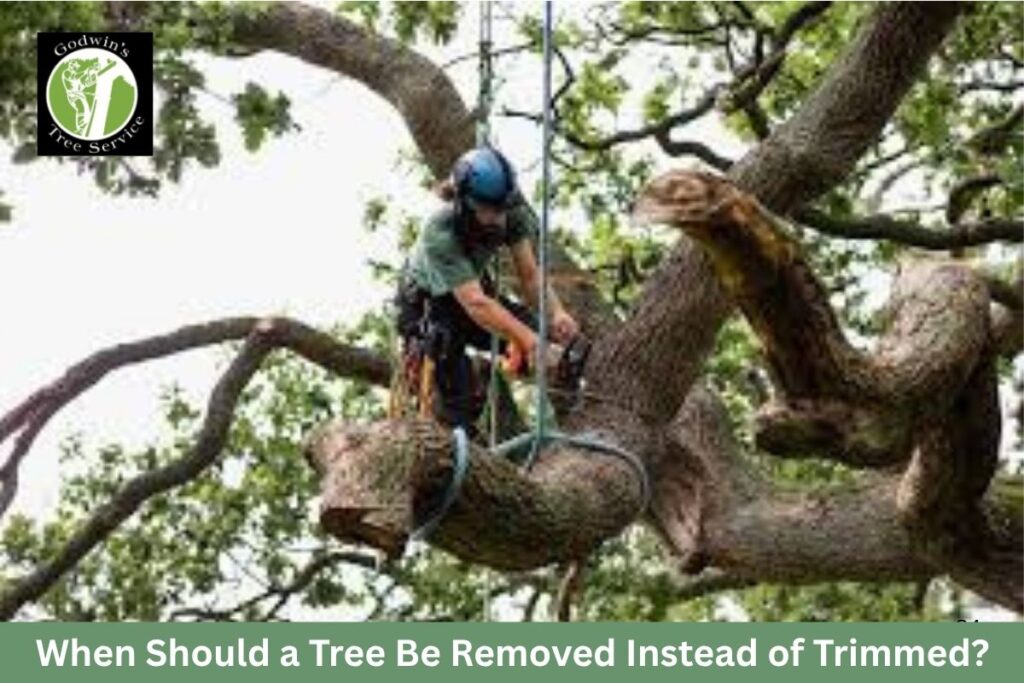
A tree in your yard can add shade and character, but not every tree can be fixed with trimming. Sometimes, what looks like a small issue may be a sign of a bigger problem underneath.
Many homeowners try trimming first, hoping it will solve the issue. In some cases, it works. But in others, trimming only delays a problem that could get worse over time.
Knowing when a tree should be removed instead of trimmed can help you avoid damage, reduce risk, and make the right decision for your property.
The Difference Between Tree Trimming and Tree Removal
Before deciding, it helps to understand what each option actually does.
Tree trimming focuses on:
- Cutting back overgrown branches
- Removing dead or weak limbs
- Shaping the tree for better growth
Tree removal means:
- Taking down the entire tree
- Clearing it from the ground up
- Removing a potential hazard completely
Trimming works when the tree is still in good condition. Removal is needed when the tree is no longer stable or safe.
Signs a Tree Should Be Removed Instead of Trimmed
Some problems go beyond what trimming can fix. These signs indicate that removal may be the better choice.
The Tree Is Dead or No Longer Growing
A dead tree cannot recover. It becomes dry, brittle, and more likely to break.
You may notice:
- No leaves during growing season
- Bark falling off
- Dry, lifeless branches
In this condition, trimming will not restore the tree. Removal is usually necessary.
Severe Structural Damage
If a tree has major cracks or splits in its trunk, it may not be stable.
This can happen due to:
- Storm damage
- Heavy winds
- Aging
A damaged structure weakens the tree’s ability to stand. Trimming branches will not fix this issue.
The Tree Is Leaning Too Much
A slight lean is normal for some trees, but a sudden or increasing lean can be a warning sign.
This may indicate:
- Root damage
- Soil instability
- Internal weakness
A leaning tree can fall unexpectedly, especially during storms.
Root Damage or Decay
Healthy roots are essential for a tree’s stability. If the roots are damaged, the tree may not be able to support itself.
Common causes include:
- Construction near the tree
- Soil erosion
- Disease
When roots are affected, trimming the top does not solve the problem.
Disease or Pest Infestation
Some tree diseases and pests can spread quickly and weaken the entire structure.
Signs include:
- Discolored or spotted leaves
- Holes in bark
- Unusual growth patterns
If the problem has spread too far, removal may be needed to prevent it from affecting nearby trees.
Tree Is Too Close to Structures
Trees growing too close to your home or other structures can create ongoing problems.
These may include:
- Branches touching the roof
- Roots affecting the foundation
- Limited space for proper growth
If the location itself is a problem, trimming may not be enough.
Repeated Branch Failure
If branches keep breaking even after trimming, it may be a sign that the tree is weak overall.
This can lead to:
- Frequent maintenance
- Increased risk during storms
- Ongoing safety concerns
In such cases, removal may be a more practical option.
Situations Where Trimming Is Enough
Not every tree needs to be removed. In many cases, trimming can solve the issue.
Trimming may be suitable if:
- The tree is healthy overall
- Only a few branches are damaged
- Growth is uneven but stable
- The tree is not affecting nearby structures
A well-maintained tree can continue to grow safely with regular trimming.
Risks of Choosing the Wrong Option
Making the wrong decision can lead to bigger problems later.
If a tree that should be removed is only trimmed:
- The risk of falling remains
- Damage may still occur
- Costs can increase over time
If a healthy tree is removed unnecessarily:
- You lose shade and landscape value
- The yard may look empty
- Replacement may take years
Choosing correctly helps balance safety and long-term use of your yard.
Factors to Consider Before Deciding
Several factors can help guide your decision.
- Age and condition of the tree
- Location relative to your home
- Extent of visible damage
- History of branch breakage
- Impact on surrounding area
Looking at the full picture makes it easier to decide whether trimming or removal is needed.
Can You Decide on Your Own?
Some signs are easy to spot, but others are not always clear.
It can be difficult to:
- Assess internal damage
- Judge root health
- Predict how a tree will respond to trimming
In many cases, what looks like a minor issue may be more serious than it appears.
Why Many Homeowners Choose Professional Evaluation
Understanding the condition of a tree requires careful inspection. It is not just about what is visible from the outside.
A proper evaluation focuses on:
- Tree stability
- Structural condition
- Root health
- Overall growth pattern
This helps determine whether trimming is enough or if removal is the safer option.
Final Thoughts
Deciding between trimming and removal is not always simple. While trimming works for many situations, there are times when removing the tree is the better choice.
Signs like severe damage, leaning, root problems, or disease should not be ignored. In these cases, trimming may only delay a larger issue.
If you are unsure about the condition of a tree in your yard, it may be time to take a closer look. For homeowners in Chesapeake, Godwins Tree Service handles both trimming and removal based on what your property needs. Taking action at the right time can help prevent future problems.
FAQs
In some cases, yes. But if the damage is severe, removal may be the better option.
Signs include no leaves, brittle branches, and bark falling off.
Not always, but a sudden or increasing lean can be a warning sign.
Yes, roots can affect foundations, driveways, and underground systems if they grow too close.
If the tree is causing damage or has no space to grow properly, removal may be needed.