
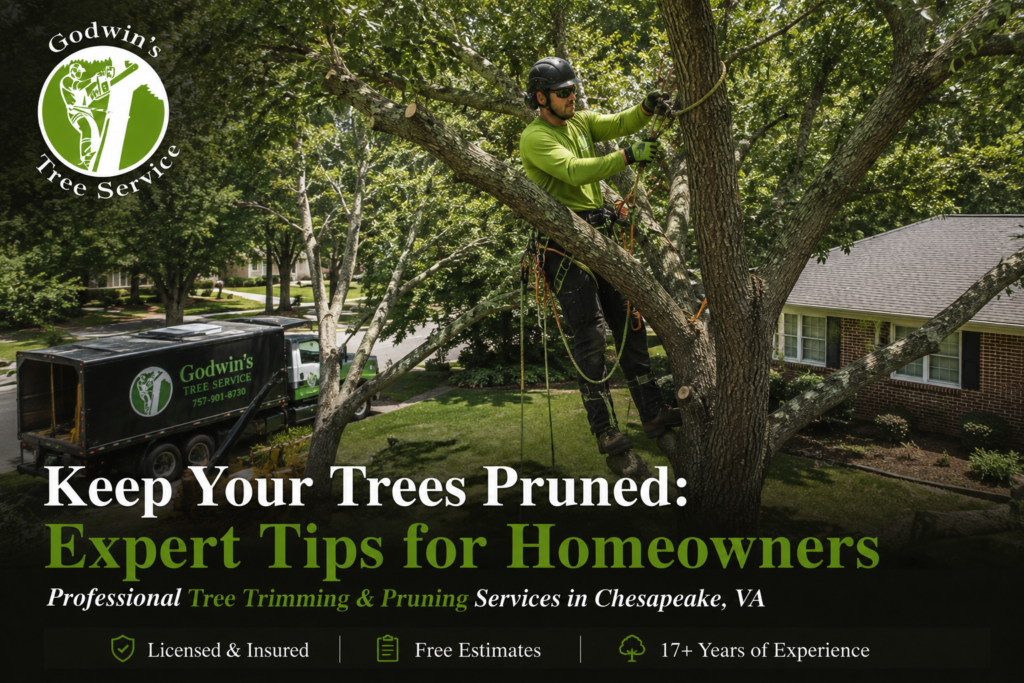
Healthy, well-maintained trees can add beauty, shade, privacy, and value to your property. Regular tree trimming also helps reduce safety risks by removing weak, damaged, diseased, or dead branches before they become a problem.
With more than 17 years of experience, Godwin’s Tree Service understands the importance of proper tree care. Whether you have mature oaks, maples, pines, or other trees, timely trimming can support healthy growth and keep your property looking its best.
Why Regular Tree Trimming Matters
Tree trimming is more than a way to improve appearance. When performed correctly, it supports the overall health and structure of a tree while reducing potential hazards.
Removing dead or diseased limbs can help limit the spread of problems throughout the tree. Trimming can also improve airflow through the canopy and allow more sunlight to reach interior branches and surrounding plants.
Safety is another major reason to maintain your trees. Weak limbs can break during storms, strong winds, or heavy weather and may damage roofs, vehicles, landscaping, or other property.
Well-maintained trees also contribute to curb appeal. A properly shaped canopy can make your landscape look cleaner and more inviting while adding to the overall appearance of your property.
Signs Your Trees May Need Trimming
Knowing what to look for can help you recognize when your trees need attention. Common warning signs include:
- Dead, broken, or visibly damaged branches
- Branches that cross or rub against each other
- Excessively dense growth within the canopy
- Branches growing toward structures, walkways, or utility areas
- Weak or poorly positioned limbs
- Limited sunlight reaching the interior of the canopy
Different tree species have different growth patterns and pruning requirements. Oaks, maples, pines, and other common varieties should be evaluated according to their structure, age, condition, and growing habits.
Best Times for Seasonal Tree Trimming
The right trimming schedule depends on the tree species, its condition, and the type of pruning required. In many cases, late winter or early spring is a suitable period for structural pruning because many trees are dormant.
Spring
Light pruning in spring can help remove damaged growth and prepare trees for the active growing season. Avoid excessive trimming once vigorous new growth has begun.
Summer
Selective summer trimming can help control unwanted growth and maintain the tree’s shape. It should be performed carefully to avoid removing too much healthy foliage.
Fall
Fall can be useful for removing dead or damaged branches and addressing obvious structural concerns before severe winter weather arrives.
Winter
Dormant trees are often easier to evaluate because their branches are more visible without dense foliage. Winter can be an appropriate time for certain types of structural pruning.
Professional assessment is particularly helpful when larger branches, mature trees, or complicated growth patterns are involved.
Expert Tips for Effective Tree Pruning
Proper pruning should have a clear purpose. Removing too many branches or making improper cuts can weaken a tree rather than improve it.
Residential Tree Trimming
For residential properties, focus on maintaining healthy structure while keeping trees away from areas where branches could become a hazard.
Crown thinning can selectively reduce excess branches and improve light and airflow without drastically changing the natural shape of the tree. Shaping should be done conservatively so the tree retains its natural appearance.
Deadwood removal is also important. Dead branches can become increasingly brittle and may fall without warning, especially during storms or high winds.
Commercial Tree Trimming
Businesses also benefit from regular tree maintenance. Attractive, well-maintained trees can improve the appearance of commercial properties while helping keep parking areas, entrances, walkways, and buildings safer.
Professional trimming can address overgrown branches, deadwood, and structural concerns while maintaining a clean and professional landscape.
Use the Right Tools and Safety Practices
Basic pruning tools include hand pruners and loppers, while larger jobs may require specialized equipment. Anyone performing minor maintenance should also use appropriate protective equipment, including gloves, eye protection, and sturdy footwear.
Homeowners should avoid attempting work that involves large branches, tall trees, power lines, or difficult-to-reach areas. These situations can create serious safety risks and are better handled by trained professionals.
Understanding Tree Trimming Costs
The cost of tree trimming varies from one property to another. Several factors can affect the final price, including:
- Tree size and species
- Number of trees requiring service
- Amount of trimming needed
- Tree condition and branch structure
- Accessibility of the work area
- Equipment required for the job
Tree trimming projects may range from a few hundred dollars to $1,000 or more depending on the circumstances. The best way to understand the cost of a specific project is to request an inspection and estimate.
Godwin’s Tree Service provides free estimates, allowing homeowners to understand the scope of the work before making a decision.
How to Choose the Right Tree Trimming Service
Choosing an experienced tree service is important because improper pruning can cause lasting damage. Before hiring a company, consider its qualifications, experience, insurance coverage, and reputation.
Look for a professional who can clearly explain what your trees need and why the recommended work is necessary. Customer reviews and testimonials can also provide useful insight into service quality and reliability.
It is also worth asking about the company’s approach to pruning, safety procedures, cleanup, and pricing. A reputable tree service should be willing to answer questions and provide a clear estimate before work begins.
Conclusion
Regular tree trimming is an important part of responsible property maintenance. Removing deadwood, managing excessive growth, improving branch structure, and addressing potential hazards can help trees remain healthier and safer for years to come.
With more than 17 years of experience, Godwin’s Tree Service provides professional tree care with a focus on safety, quality, and dependable service. Contact the team at (757) 816-3759 to request a free estimate and take the next step toward healthier, better-maintained trees.
FAQs
1. What is the difference between tree trimming and tree pruning?
Tree trimming generally focuses on appearance and growth management, while pruning often targets tree health, structure, and problem branches.
2. How often should trees be trimmed?
Many trees benefit from maintenance every one to two years, although the ideal schedule depends on species, age, condition, and growth rate.
3. What types of trees can be trimmed?
Most common residential tree species can be trimmed, but the proper method and timing depend on the specific species and its condition.
4. Can I trim my trees myself?
Minor pruning may be manageable for homeowners, but large branches, mature trees, and hazardous locations should be handled by trained professionals.
5. When should a damaged or dying tree be inspected?
A tree showing significant decay, major damage, dead limbs, or structural weakness should be inspected by a qualified tree professional as soon as possible.